Monday, 16 December 2013

Gut Bacteria Might Guide The Workings Of Our Minds : Shots - Health News : NPR

Gut Bacteria Might Guide The Workings Of Our Minds : Shots - Health News : NPR

8 min 22 sec
Illustration by Benjamin Arthur for NPR
 
Could the microbes that inhabit our guts help explain that old idea of "gut feelings?" There's growing evidence that gut bacteria really might influence our minds.

"I'm always by profession a skeptic," says , a professor of medicine and psychiatry at the University of California, Los Angeles. "But I do believe that our gut microbes affect what goes on in our brains."
Mayer thinks the bacteria in our digestive systems may help mold brain structure as we're growing up, and possibly influence our moods, behavior and feelings when we're adults. "It opens up a completely new way of looking at brain function and health and disease," he says.

So Mayer is working on just that, doing MRI scans to look at the brains of thousands of volunteers and then comparing brain structure to the types of bacteria in their guts. He thinks he already has the first clues of a connection, from an analysis of about 60 volunteers.

Mayer found that the connections between brain regions differed depending on which species of bacteria dominated a person's gut. That suggests that the specific mix of microbes in our guts might help determine what kinds of brains we have — how our brain circuits develop and how they're wired.

Of course, this doesn't mean that the microbes are causing changes in brain structure, or in behavior.
But other researchers have been trying to figure out a possible connection by looking at gut microbes in mice. There they've found changes in both brain chemistry and behavior. One experiment involved replacing the gut bacteria of anxious mice with bacteria from fearless mice.

"The mice became less anxious, more gregarious," says of McMaster University in Hamilton, Ontario, who led a team that conducted the .

It worked the other way around, too — bold mice became timid when they got the microbes of anxious ones. And aggressive mice calmed down when the scientists altered their microbes by changing their diet, feeding them probiotics or dosing them with antibiotics.

To find out what might be causing the behavior changes, Collins and his colleagues then measured brain chemistry in mice. They found changes in a part of the brain involved in emotion and mood, including increases in a chemical called , which plays a role in learning and memory.

Scientists also have been working on a really obvious question — how the gut microbes could .
A big nerve known as the vagus nerve, which runs all the way from the brain to the abdomen, was a prime suspect. And when researchers in Ireland cut the vagus nerve in mice, they no longer saw the to changes in the gut.

"The vagus nerve is the highway of communication between what's going on in the gut and what's going on in the brain," says of the University College Cork in Ireland, who has collaborated with Collins.

Gut microbes may also communicate with the brain in other ways, scientists say, by modulating the immune system or by producing their own versions of neurotransmitters.

"I'm actually seeing new neurochemicals that have not been described before being produced by certain bacteria," says of the Texas Tech University Health Sciences Center in Abilene, who studies how microbes affect the endocrine system. "These bacteria are, in effect, mind-altering microorganisms."

This research raises the possibility that scientists could someday create drugs that mimic the signals being sent from the gut to the brain, or just give people the good bacteria — probiotics — to prevent or treat problems involving the brain.


One group of scientists has tested mice that have behaviors similar to some of the symptoms of autism in humans. The idea is that the probiotics might correct problems the animals have with their gastrointestinal systems — problems that many autistic children also have.

In the mice, many of their autism behaviors were no longer present or strongly ameliorated with probiotics, says at the California Institute of Technology in Pasadena, Calif. His research will be soon in the journal Cell.

Experiments to test whether changing gut microbes in humans could affect the brain are only just beginning.

One team of researchers in Baltimore is testing a probiotic to see if it can help prevent relapses of mania among patients suffering from bipolar disorder.

"The idea is that these probiotic treatments may alter what we call the microbiome and then may contribute to an improvement of psychiatric symptoms," says , director of psychology at the Sheppard Pratt Health System.

"It makes perfect sense to me," says Leah, a study participant who has been diagnosed with bipolar disorder. She agreed to talk with NPR if we agreed not to use her full name. "Your brain is just another organ. It's definitely affected by what goes on in the rest of your body."

It's far too soon to know whether the probiotic has any effect, but Leah suspects it might. "I'm doing really well," she says. "I'm about to graduate college, and I'm doing everything right."

Mayer also has been studying the effects of probiotics on the brain in humans. Along with his colleague Kirsten Tillisch, Mayer gave healthy women yogurt containing a probiotic and then scanned their brains. He found subtle signs that the brain circuits involved in anxiety were less reactive, according to a published in the journal Gastroenterology.

But Mayer and others stress that a lot more work will be needed to know whether that probiotic — or any others — really could help people feel less anxious or help solve other problems involving the brain. He says, "We're really in the early stages."


There's so much more to developing a healthy microbiome than just eating yogurt and drinking kombucha, as many people like to claim. It starts at birth. As you travel through the birth canal, you come into contact with many different and important microorganisms through contact with your mother's vaginal fluids and even fecal matter. If you're born via C section, you're starting out at a disadvantage. Then breastfeeding is the next step. Mother's milk is where you get your next dose of a very broad spectrum of microorganisms. Then throughout life, as you come in contact with other people, you eat dirt, you hang around farm animals, etc, these are all mother nature's way of helping you develop that microbiome, which is essentially the core of your immune system. Eating is important too, and one of the biggest problems with our modern food system is that everything is pasteurized, cooked all the way through, sterilized, irradiated, etc. All of the healthy microorganisms that used to exist are being killed.

So the point here is that people need to rethink many of their lifestyle choices if they want to heal their guts. Every time you take an antibiotic, you likely suffer much collateral damage because you may be permanently killing beneficial species that you may never be exposed to again. They don't exist in yogurt or kombucha. Either that, or consider fecal bacteriotherapy (fecal transplants) since it seems to be one of the the most promising new approaches to healing microbiomes.

Friday, 22 November 2013

Transient epileptic amnesia - Wikipedia

Transient epileptic amnesia - Wikipedia, the free encyclopedia

Transient epileptic amnesia (TEA) is a rare but probably underdiagnosed neurological condition which manifests as relatively brief and generally recurring episodes of amnesia caused by underlying temporal lobe epilepsy.[1] Though descriptions of the condition are based on fewer than 100 cases published in the medical literature,[2] and the largest single study to date included 50 people with TEA,[3][4] TEA offers considerable theoretical significance as competing theories of human memory attempt to reconcile its implications.[5]

Symptoms

A person experiencing a TEA episode has very little short-term memory, so that there is profound difficulty remembering events in the past few minutes (anterograde amnesia), or of events in the hours prior to the onset of the attack, and even memories of important events in recent years may not be accessible during the amnestic event (retrograde amnesia).[6] Some people report short-lived retrograde amnesia so deep that they do not recognize their home or family members, though personal identity is preserved.[7] The amnestic attack has a sudden onset. Three-fourths of cases are reported upon awakening. In attacks that begin when an individual is fully alert, olfactory hallucinations or a "strange taste"[3] or nausea have been reported. Somewhat less than half the cases include olfactory or gustatory hallucinations, and slightly more than a third involve motor automatisms. A quarter of attacks involve a brief period of unresponsiveness.[4] Frequently, however, there is no warning.

Thursday, 14 November 2013

Q&A: New evidence shows brain-training games don’t work | SmartPlanet

Q&A: New evidence shows brain-training games don’t work | SmartPlanet

By | May 28, 2012, 4:32 PM PDT
Train your brain.
The desire to improve our cognitive ability through brain-training games has turned into what is said to be a trillion-dollar industry. Such games are based on the idea that testing our memory, attention and other types of brain processing will improve our overall intelligence and brain function.

Companies like Lumosity, Cogmed and Nintendo are all cashing in hugely on this idea. But many scientists and experts in brain research feel the theory has serious flaws. There has yet to be concrete evidence proving anything close to what such companies claim to be able to do.

In fact, David Z. Hambrick, associate professor of psychology at Michigan State University, and his colleagues Thomas S. Redick (lead researcher) and Randall W. Engle will soon be publishing new evidence that fails to replicate the very study that so much of the commercial industry rests upon.

We spoke with Hambrick about the limits of intelligence and the findings from this new and potentially ground-breaking study.

SmartPlanet: What are these brain games actually training or improving?

David Z. Hambrick: The so-called brain games are essentially tasks that require the player to remember information, to attend to information and make judgments, and to comprehend texts or imagine how an object might look in different orientations.

SP: What would be one test used by one of these brain-game companies, like Lumosity? 

DZH: One is called a dual n-back test. Users have to monitor two streams of information, one visual and one auditory. And each time one or both of these streams emits some kind of an established target you press a key. So it’s a divided-attention task: You have to split your attention between two channels of input.


SP: How is that supposed to be improving our intelligence?

DZH: Great question. It’s designed to improve working memory. You can think of working memory as your mental workspace for concurrently sorting and processing information. One of the core capabilities of working memory is the ability to control attention. Lumosity is marketing this test to increase intelligence because it is designed to tap into this ability to control attention. Their idea is that if we can improve the ability to control attention then we can, by extension, improve people’s intelligence.

SP: What was the trigger that launched this huge industry trend of brain games?

DZH: Psychologists have been interested in the idea of improving intelligence for over a century. But until the mid-2000s, people were not very optimistic about this whole enterprise.
However, there was a specific study published in 2008 in the Proceedings of the National Academy of Sciences by Susanne Jaeggi and Martin Buschkuehl that renewed interest in this topic.

SP: Could you describe that study?

DZH: Sure. They had subjects complete a test to measure reasoning ability. Subjects watched patterns that change across rows or down columns, and made an inference about how those patterns change. Then some of the subjects received the dual n-back training. One group received eight sessions of training, another group received 12 sessions of training, a third group 17 sessions, and a fourth group 19 sessions of training.

Some of the subjects were assigned to a control group, meaning they didn’t receive any training after taking the reasoning test. Then everybody returned for a second administration of the test.
They found that the training subjects showed a bigger gain in reasoning test scores than the control subjects. And they also found that the training groups that received more hours of training showed a bigger gain in reasoning test scores.

They explicitly claimed that this was an increase in intelligence, and not merely in performance on a single test of reasoning. In particular an increase in what we call fluid intelligence.

SP: What is fluid intelligence?

DZH: Fluid intelligence is the ability to solve novel problems and adapt to new situations, as opposed to crystallized intelligence, which is acculturated learning, so for example knowing the meaning of the word “concur”, or knowing what the Koran is.

It has been thought that fluid intelligence is pretty much fixed, and that it is impervious to efforts to improve it through training. So the finding in the Jaeggi study that fluid intelligence can be improved created a big stir.

SP: But you claim the study has major flaws?

DZH: If you find that people get better in one test of reasoning it doesn’t mean necessarily that they’re smart, it means that they’re better on one test of reasoning. You can’t measure fluid intelligence with any single test, it’s measured with multiple tests.

SP: And the other flaw?

DZH: There were some pretty striking differences between the control group and the training groups. The control group who received no training, went home and did whatever. But the training groups, on the other hand, came in regularly for training. This raises possibility of motivation being an explanation: They wanted to do well in the experiment.

Another important point is that there were procedural differences across these training groups that really complicate interpretation of the results, and in particular the claim that more training equals more gain. These procedural differences were not reported in the Jaeggi article. We found out about them in Jaeggi’s unpublished dissertation, and through follow-up emails to Jaeggi.

SP: You worked with lead researcher Tom Redick to attempt to replicate the findings from the Jaeggi study. And this research is about to be published. Can you give us a preview of what you found?

DZH: So, we set out to replicate the findings, correcting all of these problems. We had subjects complete not one but eight tests of fluid intelligence. We then assigned them to a training group in which they received 20 sessions of training in Jaeggi’s dual n-back task or to one of two control conditions. The “no-contact” control condition was the same as Jaeggi’s control condition. By contrast, in the “active-control” condition, subjects were trained in a task that we designed to be as demanding as dual n-back without tapping working memory capacity. Finally, we had all subjects perform different versions of the eight intelligence tests half way through training and at the end.

And what did we find? Zip. There wasn’t much more than a hint of the pattern of results that Jaeggi reported in any of the eight intelligence tests, and nothing in the predicted direction that even approached statistical significance. If you someone were to ask me to estimate how much 20 sessions of training in dual n-back tasks improves fluid intelligence, I’d say zero.

SP: How would you define intelligence?

DZH: At a conceptual level intelligence is the ability to learn, to profit from experience, the ability to adapt to new situations, and the ability to solve problems. At a technical level I define intelligence as the variance that’s common across a set of tests of cognitive ability.

SP: Explain that last part for us.

DZH: If you give a large sample of people a battery of cognitive tests, spatial ability, verbal ability, mathematical ability and so on, it turns out that someone who does well on one test is going to tend to well on all the others. This common factor we call “psychometric G”, or “g” for general.

SP: How do we currently measure intelligence?

DZH: We measure intelligence with tests that are designed to tap into cognitive processes like retrieving information from memory, manipulating mental visual images, and making rapid judgments about stimuli, as well as tests that require analytical reasoning where you have to make deductions of inferences.

SP: Presumably this is involved in IQ testing. What does IQ really mean?

DZH: IQ is an index of that general factor. In a standardized IQ test people take a bunch of sub-tests. They take tests of comprehension, and special reasoning, etc. IQ is a summary measure that reflects performance across all of those things.

But there is intense speculation still about what IQ really is. It could reflect the sort of the efficiencies and the processes involving working memory and attention. It could reflect strategies for processing information and solving problems. It certainly reflects brain function. But this is the million-dollar question for intelligence researchers: What exactly is intelligence?

SP: Because it’s a value that society deems important, and it has very real implications, right?

DZH: Well one thing we know for sure is that it’s practically useful. IQ, despite what people will say about being a meaningless number, predicts a lot of things. It predicts job performance better than any single variable that we know of. It predicts educational attainment, it predicts income, it predicts health, it predicts longevity even after you take into account sort of obvious confounding factors like socio-economic status. So it captures something important and something useful. If we were to no longer use IQ tests, for things like personnel tests of college admissions, it would cost society billions. IQ is the single best predictor of a lot of outcomes that we value in society.
 
SP: Is there any proven way to improve our intelligence?

DZH: There’s been all this focus on brain training and cognitive training. But there is not convincing evidence to support the claim by Lumosity and other companies that these programs have far-reaching beneficial effects on cognitive functioning. However, there is actually some evidence that physical exercise, ironically, does improve brain function. And there is something else we can do.

SP: What?

DZH:  I talked about this distinction between fluid intelligence and crystallized intelligence. Fluid intelligence is the ability to solve novel problems and crystallized intelligence is your knowledge acquired through experience.

Fluid intelligence is hard to improve. It’s not readily modifiable like weight. But crystallized intelligence can be improved. You can increase crystallized intelligence through reading. You learn. And this is a good thing to do. We want people to go into the voting booth with enough knowledge to make an informed decision about whom to vote for. And it can come from acquiring crystallized intelligence about the world that might be relevant to making good decisions.
[Photos via Jean et Melo and David Z. Hambrick]

Why “Brain Training” with Luminosity doesn’t work | The Stochastic Man

Why “Brain Training” doesn’t work | The Stochastic Man

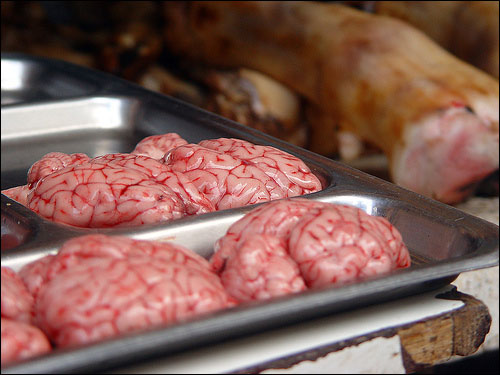
Mmm...brains, anyone?

Opening up my Guardian today, I was pleased to read their report on the Which? Magazine survey focusing on “Brain Training” games. You know the sort; the user is given a simple repetitive task to do, such as adding up numbers, and over time it will ‘improve’ your brain. Except that it won’t really. Well, not much more then any other activity, such as doing a crossword. That won’t set you back £30 for one of their games as well.

The Which? report found, with the help of several neuroscientists, that there was no peer-reviewed evidence to back up any of the manufacturer’s claims that they will improve performance or stave off dementia and other mental illnesses. The same level of improvement could have easily been attained through playing other computer games such as Tetris.

Fair play to the Guardian for being the only major British newspaper to report this, especially as they have a page on their jobs website sponsored by Lumosity in which one can, erm, ‘Train their Brain’ in order to “Improve basic cognitive abilities including memory and processing speed.”

'Train your brain' on the Guardian's own website

Lumosity have been mentioned a lot in connection with this report, as it is their very own Michael Scanlon who offered a rebuttal to their findings. “We would never say Lumosity is proven to improve day-to-day living, but there is more and more evidence it does. We have actually conducted our own clinical trials to measure effectiveness of the product”, he said using his own mouth.

It’s interesting that he said “We would never say Lumosity is proven to improve day-to-day living”, considering that in the picture above it explicitly claims that their games can improve memory (note the meaningless graph on the right-hand side) and ‘processing speed’, whatever the hell that is. Their own website is full of PR guff on how their games ‘take care of your brain’ (and presumably dry your tears when you’re feeling down as well).

The news article also lists him as a ‘neuroscientist’, which is repeated ad nauseum in other reports on this story. Again this is interesting as this factoid isn’t listed on Lumosity’s own website, and the only references to his neuroscience qualifications was this page, which lists him as an alumnus of Stanford University. So it appears he has the credentials, but I find it a bit weird calling someone a neuroscientist when they haven’t recently performed or published any research. Especially research into their own wondergames.

That’s not entirely true. Dig deeper and you will find this small internal study which appears to back up the companies’ claims that their games will makes you smarter. Except that it’s flawed to hell and back (which is presumably why it’s unpublished in any decent scientific journal). They took around 20 people and split them into two groups; one that performed simple visual and memory tests without playing their games (the so-called ‘control group’) and another which did whilst playing Lumosity games in between. So what went wrong?

1) Few participants. They only looked at 23 people, with 14 placed in the trained group and nine placed in the control group (and one of them dropped out). This is a tiny number to make up a scientific study with. There will naturally be so much random noise that it would be hard to pinpoint down any changes between groups. It’s not exactly hard to hire people to play games for a study, so there’s really no excuse.

2) Lack of a decent control. The only ‘control’ group did not play anything between taking tests. So how can the investigators be sure that it is the games themselves causing any benefit, or just the fact that a group of people were performing a simple task to increase awareness? A third group in which volunteers did crosswords or played Tetris in between tests would have sorted this out. Of course, this might show that Lumosity games are not very good, which would make for a horrendous marketing campaign, wouldn’t it?

3) Cooked results. One of their claims is that ‘memory span’ was increased after playing their games. Was it though? Their graph was presented as follows:

graff

The study made a big deal that in the trained group there is a ‘statistically significant’ increase in memory capacity after playing these games. That is, the increase was very unlikely to happen by random. What about the control group though? The scores attained there are, in essence, exactly the same as the trained group. So these games don’t make a bit of difference to memory performance, in this regard. In fact I wouldn’t be suprised that just getting used to the tests lead to a naturally increased score, just by becoming accustomed to it.

Sigh. I’m getting tired now or marketing guff and the pointless word ‘Lumosity’. If you really want to mildly stretch your brain, why not do a crossword? The Guardian have a massive archive for you to try. (I have to linked to them as I do feel mildly guilty with the earlier comments; being a long-haired liberal, it is still my newspaper of choice.)

Finally, for more brain myths debunked, why not watch online the University of Edinburgh’s Christmas lecture, given by the excellent Sergio Della Sala? OK so it may take ages to load and still relies on Quick Time as opposed to Flash, but it’s a great way to learn more about why these marketing ideas are actually more likely to turn your brain to goo.

Tuesday, 1 October 2013

The Science of the Perfect Nap

The Science of the Perfect Nap


According to a growing body of research, napping is a smart thing to do. It can help refresh the mind, make you more creative, boost your intelligence, and even help you live a longer, healthier life. It's slowly gaining acceptance as part of a healthy lifestyle, even in some corporate offices. Read on as we share the science behind the need to nap, and a scientist-approved method for taking the ideal snooze.


Why We Need Naps

In our modern hurried world, making time for even a short nap might seem like an impossible luxury. Yet, for some, they may be necessary to make it through the day at peak mental and physical performance. Our bodies crave naps for a reason, some based on our evolution, others on our habits.

Not getting enough sleep

The No. 1 reason many people need a nap? Not getting enough sleep at night. While there is no magic number of hours that people need to get at night (the ideal varies by age and other highly individual factors), the National Sleep Foundation suggests that adults get seven to nine hours. Unfortunately, a CDC study found that more than 40 million workers get less than six hours a night. That lack of sleep can have consequences, and if it happens often enough your body may start seeking out rest during the day, leaving you in dire need of a nap.

Poor nutrition

Another easily remedied reason for feeling sleepy throughout the day is based on nutrition. Many people feel tired in the afternoon because of plummeting blood sugar levels after a poorly planned lunch. This can be caused by two things: not eating enough at lunch to supply enough energy to get through to dinner, or by choosing foods that don't contain enough protein and fiber and far too much of sugars and other carbohydrates. Either way, these kinds of lunches leave most feeling tired, sluggish, and worn out well before the work day is over.

Our bodies are programmed that way

It may be more common for people in the U.S. to only sleep at night, but that isn't exactly the way our bodies are necessarily designed to work. Wakefulness throughout the day is governed by our natural biological clock, a phenomenon more commonly referred to as the circadian rhythm. While some may not feel sleepy until evening, others experience a small "hump" in sleepiness in the mid-afternoon that's entirely normal and is actually programmed into the circadian schedule. As a result, the desire to nap is simply an expression of the natural rhythms of our bodies, regardless of whether we get enough sleep at night.

It's an evolutionary necessity

As the day goes on, learning ability, alertness, and focus degrade. A nap can help counteract that effect and give those mental faculties a boost. While this might not be an absolute necessity for survival today, especially with the invention of caffeine-laden energy drinks, at one point in our evolutionary history it just might have been. Slowed reaction times and decreased watchfulness could have meant the difference between life and death for our ancestors (and can still have a marked effect on our own success today). A short nap, even just 15 to 20 minutes, can greatly increase the faculties that increase the odds of survival, so it's only natural that we're predisposed to want to sleep.


 Studies on Napping

So now that you know why your body is so determined to nap, it's time to learn what benefits there are to giving into that urge. There has been a tremendous amount of research done on the advantages of napping, and the results of just a few of those studies are shared here.

The benefits of napping apply even to the very young

Napping is good for you at any age, research suggests, and may even be essential for children who are still growing and developing. A University of Colorado Boulder study showed that toddlers between two and a half and three who missed a single daily nap showed more anxiety, less joy and interest, and a poorer understanding of how to solve problems. While children build up sleep pressure more quickly (the desire to need to sleep) due to highly active and connected brains, the same problems can be seen in adults who don't get in a daily nap.

Sleeping on the job is a good thing

Some companies, Google and Apple included, are allowing employees to take naps on the job, and science proves that that's probably a really great idea. Why? Studies show that power naps, short 10 to 15 minute naps, improve mental efficiency and productivity, which is a small investment in time for such a big payoff in company morale and production.

An afternoon nap markedly boosts the brain's learning capacity

Taking a 90-minute nap the day of a test or presentation sounds like a ludicrous luxury. But a recent study on the brain's ability to recall… Read…

Whether you're heading to class or just trying to learn a new skill, making sure you're well-rested beforehand can make a big difference, research from Berkeley suggests. A study done at the school found that sleeping for an hour dramatically boosts and restores brain power, in turn making it easier to learn and retain new information. Sleep clears out our short-term memory, making room for new information and priming us to be better, more efficient learners.

Naps are more effective than caffeine

Thinking of pouring yourself a giant cup of coffee? Consider a nap instead, as research has shown that it can be a better way to wake yourself up. When researchers compared the effectiveness of getting more sleep at night to drinking a cup of coffee or taking a nap, the nap was the clear winner. Naps help to genuinely refresh your body and their impact can be much more long-lasting than that of caffeinated drinks.

Napping can boost your memory

One of the most universally beneficial effects of napping is its effect on memory. Research at Harvard Medical School found that napping, especially when accompanied by dreaming, was an effective tool for improving memory and learning ability. Even better, you may get the benefits even if your nap is interrupted. A 2008 study showed that the onset of sleep may trigger active memory processes that remain effective even if sleep is limited to only a few minutes.

Even a short nap can have a marked effect on your health

There are dozens of research studies that correlate napping with some pretty amazing health effects. A study of Greek adults found that napping at least three times a week for 30 minutes or more was associated with a 37% lower risk of death from heart disease. A British study suggests that just knowing a nap is coming is enough to lower blood pressure. Other benefits of napping include: reduced stress and a lower risk of heart attack, stroke, diabetes, and excessive weight gain.

Naps make you more creative

Neuroscientists at the City University of New York found that taking a nap boosts a sophisticated type of memory that helps us see big picture ideas and be more creative. The study used a 90-minute nap, but researchers say even short naps (12 minutes or more) can have a positive effect on memory.

Want to boost performance? Take a nap

Whether you're flying a plane or just typing in reports, a nap can make you better at doing it. Research on pilots at NASA showed that a 26-minute nap in flight (while a co-pilot was on duty) enhanced performance by 34% and overall alertness by 54%. With those kinds of results, it's no coincidence that some of the world's top athletes, world leaders, and brilliant minds have all been avowed nappers.


How to Take the Perfect Nap

If you're ready to get into your own napping habit, here's a research-based method for getting the most out of your time sleeping. These tips will help you maximize the benefits of napping, and may just have you making naps a part of your everyday schedule.

1. Watch the time. The most beneficial naps during the day according to sleep experts are relatively short. This is because short naps only allow individuals to enter the first two stages of sleep. Once you enter slow wave sleep, it's much harder to wake up and you may be left feeling groggy for hours afterwards. Ideally, keep your naps under 20 minutes. Naps of this duration are short enough to fit into a workday but still give the benefits of improved mood, concentration, alertness, and motor skills. If you've got more time, a nap of 45 minutes can also have benefits, including boosts in sensory processing and creative thinking. If you go longer, aim for at least 90 minutes so you'll work your way through all the stages of sleep and won't wake up disoriented.

2. Find a quiet and dark place. Noise and light can disrupt your ability to sleep (though if you're really tired neither may really faze you) so it's best to limit them to get the most rest out of your nap. To limit distracting sounds, put in earplugs or listen to white noise. To cut out light, darken a room or employ an eyeshade.


3. Lie down. While it might be possible to fall asleep sitting up, it'll take significantly more time; about 50% longer. It's best to lie down so you'll get to sleep quickly and make the most of your time.
4. Get in the napping zone. If you want to fall asleep quickly and actually enjoy the restful benefits of napping, you need to shut out the nagging voices in your head that are reminding you of all the things you need to get done. Meditation techniques are a great way to do that, researchers advise. Concentrate on your breathing, relax your muscles, and even use visualization techniques to take you somewhere calming.

Didn't get enough sleep last night? Grab a quick midday nap just after a cup of coffee. From Wired's How To wiki: Read…

5. Coordinate your caffeine. If you need a little extra boost besides your nap, you should coordinate the two. Caffeine takes about 20 to 30 minutes to take effect, so if you drink a cup of coffee before you nap, it'll be kicking in just as you're waking up. The practice is called a "caffeine nap" and studies at Loughborough University showed that the combination can actually leave individuals feeling more refreshed than just one or the other alone.

6. Plan to nap. Ideally, you want to take a nap before you get to the point that extreme sleepiness can become dangerous or uncomfortable. So, plan naps into your day so you'll know one is on the horizon and you'll never be left feeling incredibly out of it as you work, drive, or do other tasks.

7. Set an alarm. You don't want to sleep longer than you intend, so always set an alarm to ensure that you wake up within the time frame you set for yourself and don't drift into sleep cycles that could leave you drowsy.

8. Cut out the guilt. Science has shown time and time again that napping is not only natural, it's extremely beneficial. Don't guilt yourself out of a nap by focusing on what you need to get done or worrying what others might think. Instead, enjoy the nap and reap the benefits of improved productivity, energy, and mental capacity that it offers.

Want more info on naps? Check out Lifehacker's tips here.
The Surprising Science Behind Napping | Medical Coding and Billing

This post originally appeared on the Medical Coding & Billing blog.

Calculate the Best Time to Nap with This Interactive Nap Wheel

Calculate the Best Time to Nap with This Interactive Nap Wheel


There's nothing like a power nap to restore energy and improve productivity. Now you can get the "ultimate" power nap by timing it precisely for when your body and mind may most need it, using this Take a Nap Nap Wheel. 

According to Dr. Sara Mednick, a sleep researcher and author of the Take a Nap! book, the ideal napping time is the point in the day when REM and slow-wave sleep (a.k.a. deep sleep) cross. In the moveable nap wheel, drag the wake up time dial to when you woke up and find where the blue and yellow circles intersect to see what time to hit the sack. In this example, if you wake at 7am aim for a 2pm nap.

Previously mentioned cheat sheet for power naps also gave an approximation for the best time to nap, but based on if you were a night owl or a lark. This nap wheel is more precise—though, of course, you don't have to nap at exactly that time. Getting a nap in any time around that sleepy period is like rebooting your brain.


Cheat Sheet for Power Naps
The Boston Globe's web site has a great infographic that covers just about all the basics of energy-restoring naps—when to take them, how long… Read…

Naps Can Seriously Improve All-Day Learning Abilities
Taking a 90-minute nap the day of a test or presentation sounds like a ludicrous luxury. But a recent study on the brain's ability to recall… Read…

How Long to Nap for the Biggest Brain Benefits

How Long to Nap for the Biggest Brain Benefits
For a quick boost of alertness, experts say a 10-to-20-minute power nap is adequate for getting back to work in a pinch.
For cognitive memory processing, however, a 60-minute nap may do more good, Dr. Mednick said. Including slow-wave sleep helps with remembering facts, places and faces. The downside: some grogginess upon waking.

Finally, the 90-minute nap will likely involve a full cycle of sleep, which aids creativity and emotional and procedural memory, such as learning how to ride a bike. Waking up after REM sleep usually means a minimal amount of sleep inertia, Dr. Mednick said.


According to a growing body of research, napping is a smart thing to do. It can help refresh the mind, make you more creative, boost your… Read…

Taking a nap, we've seen time and again, is like rebooting your brain. But napping may be as much of an art as it is a science. The Wall Street Journal offers recommendations for planning your perfect nap, including how long to nap and when.3

The sleep experts in the article say a 10-to-20-minute power nap gives you the best "bang for your buck," but depending on what you want the nap to do for you, other durations might be ideal:
For a quick boost of alertness, experts say a 10-to-20-minute power nap is adequate for getting back to work in a pinch.
For cognitive memory processing, however, a 60-minute nap may do more good, Dr. Mednick said. Including slow-wave sleep helps with remembering facts, places and faces. The downside: some grogginess upon waking.

Finally, the 90-minute nap will likely involve a full cycle of sleep, which aids creativity and emotional and procedural memory, such as learning how to ride a bike. Waking up after REM sleep usually means a minimal amount of sleep inertia, Dr. Mednick said.
In addition to those recommendations, one surprising suggestion is to sit slightly upright during your nap, because it will help you avoid a deep sleep. And if you find yourself dreaming during your power naps, it may be a sign you're sleep deprived.
There's nothing like a power nap to restore energy and improve productivity. Now you can get the "ultimate" power nap by timing it… Read…
While you're planning your nap, don't forget to time it during the right time of day as well. The Perfect Nap: Sleeping Is a Mix of Art and Science | The Wall Street Journal via NextDraft